
Steam boiler Booster (South Korea)

NBO Series
NBO (500 – 1500) – M SERIE (GAS)
- Booster vertical water-tube steam boilers are designed for producing saturated steam up to 10 kg/cm2 and pressure with the max. Temperature of 180 °C (for NNB boiler -195 °С)
- External separator provides production of steam with high level of dryness.
- Small dimensions
- Minimum heat loss due to the insulation of the whole boiler shell and combustion air pre-heating
- Production of steam in 4-5 minutes after the operation start
- Operates with light and heavy oil (mazut)
- Regulation of the boiler is facilitated due to Multifunctional Neuron system
NBO (500-1500) – M
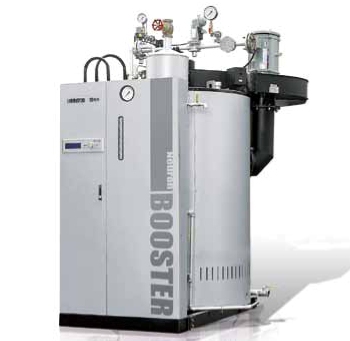
NBO (500 – 1500) – G(GD) SERIE (GAS/LIQUID OIL)
- Booster vertical water-tube steam boilers are designed for producing saturated steam up to pressure of 10 kg/cm2 and the maximal temperature of 180 °С
- Minimum heat loss due to the insulation of the whole boiler shell and combustion air pre-heating
- Production of steam in 4-5 minutes after the operation start
- It’s possible to install the boilers in production areas due to its specific constructional features and small dimensions
- Possibility of remote control, scheduling and cascading operation
- Automatic blowback mode is available
- GD combined boilers have two burners which are operated with gaz and oil
NBO (500-1500) – G(GD)
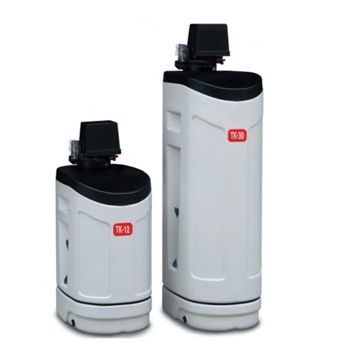
WATER SOFTENING
TK/LP
Specifications of TK series:
- Complete automatic control and regeneration
- Resistant to corrosion due to plastic material
- Simple construction and low failure rate
- No necessity of salt filling at each regeneration (one-time filling up is enough for ten regenerations)
- Possibility of free control of time and regeneration cycle
Specifications of LP series:
- Complete automatic control and regeneration
- No corrosion due to absence of metal layers
- Possibility of free control of time and regeneration cycle
- No necessity of salt filling at each regeneration


